

BONDS UNDER LOAD
Heavy-duty double-sided tape for loaded bonds
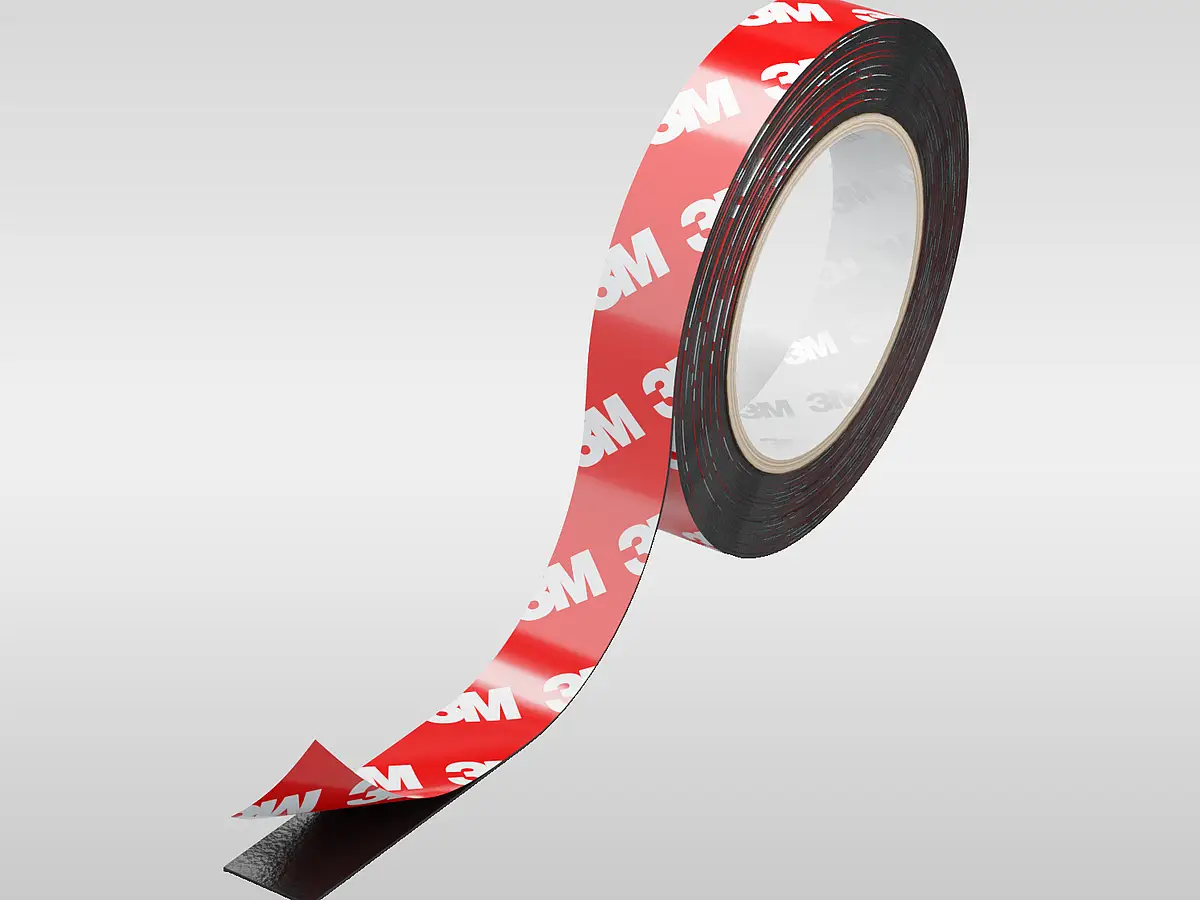
The required strength of a bonded joint depends on your application: load, force direction and surface work together. Compare suitable double-sided tapes using product data, then match the shape and application process to your components.
01
Selection criteria
What load must the bond carry?
Start with both joining parts, the available bond area and the direction of the forces. A force parallel to the bond area tests shear strength; peel and changing loads must also suit the joint. Surface, service life, environment and application affect the choice of adhesive, carrier and tape thickness. A single adhesion value cannot replace this assessment.
02
HIGH-STRENGTH TAPES
Heavy-duty double-sided tape in the range
The listing shows double-sided tapes assigned to the “extra strong” range. Check each product's construction, adhesion, shear strength and suitability for your joining parts; the range label does not define an allowable load.

Double-sided tape
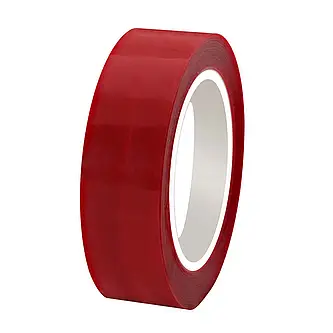
Iguna CL - Clear acrylic foam - 0.5 mm thickness - 500 mm x 33 m
Double-sided tape
Iguna CL - Clear acrylic foam - 1.0 mm thickness - 500 mm x 33 m
Double-sided tape
Iguna CL - Clear Acrylic Foam - 2.0 mm Thickness - 500 mm x 16.5 m
Double-sided tape
Iguna CL - Clear Acrylic Foam - 3.0 mm Thickness - 500 mm x 5 m
Double-sided tape
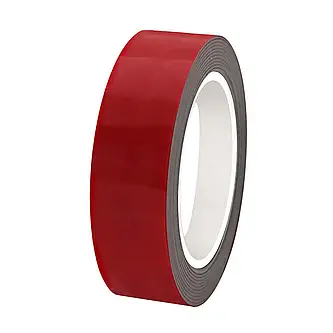
Iguna HS - High Standard Acrylic Foam - 0.4 mm Thickness - 900 mm x 33 m
Double-sided tape
Iguna HS - High Standard Acrylic Foam - 0.64 mm Thickness - 900 mm x 33 m
Double-sided tape
Iguna HS - High Standard Acrylic Foam - 0.8 mm Thick - 900 mm x 33 m
Double-sided tape
Iguna HS - High Standard Acrylic Foam - 1.2 mm Thickness - 900 mm x 33 m
Double-sided tape
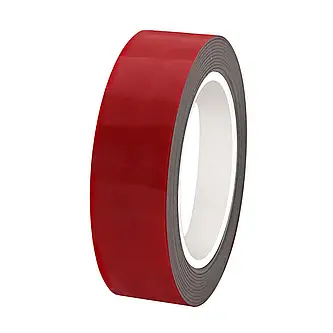
Iguna HT - High Temperature Acrylic Foam - 0.8 mm Thickness - 900 mm x 33 m
Double-sided tape
Iguna HT - High Temperature Acrylic Foam - 1.2 mm Thickness - 900 mm x 33 m
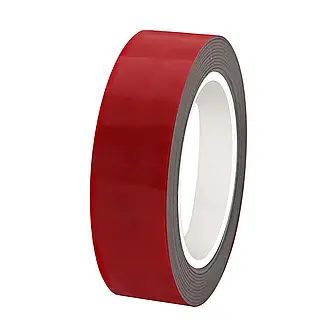
Double-sided tape
Iguna LS - Low Surface Acrylic Foam - 0.64 mm Thickness - 900 mm x 33 m
Double-sided tape
Iguna LS - Low Surface Acrylic Foam - 0.8 mm Thickness - 900 mm x 66 m
Double-sided tape
Iguna LS - Low Surface Acrylic Foam - 1.1 mm Thickness - 900 mm x 33 m
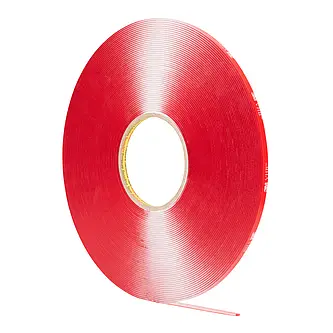

3M VHB
3M VHB Klebeband 4915, Transparent, 63 mm x 102 mm, 1.5 mm, Stanzteil
No products match this combination.
No products match all of the selected filter criteria.
03
SELECT BY LOAD
Understand adhesion and shear strength
Adhesion describes how strongly a tape is peeled from a substrate under defined test conditions. Shear strength concerns the holding force when the load acts parallel to the bond area. Different test conditions and substrates make simple comparisons of figures unreliable. For a lasting assembly, consider the size and shape of the bond area, the condition of both surfaces, how long the load acts, and temperature and moisture at the place of use.
A thicker foam carrier can accommodate irregularities and stresses differently from a thin film or transfer construction. Suitability follows from the data for the particular tape and a test on your components. Krückemeyer GmbH can cut suitable materials to the required widths and shapes or supply die-cut parts. Tell us about the joining parts, load case and application steps so that material selection and converting can be assessed together.
04
LOAD CAPACITY QUESTIONS
What does “strong” mean for double-sided tape?
“Strong” is not a standard load rating. A heavy-duty double-sided tape may stand out in the range because of its adhesion or its assignment to a high-performance product family. Whether it will hold your components depends on both surfaces, the bond area, the direction of force and how long the load acts. Read the data for the specific product and test the bond under your application conditions.
How do adhesion and shear strength differ?
Adhesion describes peeling tape from a specified substrate in a defined test. Shear strength describes the holding force when a load acts parallel to the bond area. The two figures answer different questions. High adhesion therefore does not automatically demonstrate adequate strength for your load case. Compare data only under relevant test conditions and assess the surface, bond area and load duration on your component.
What information is needed to choose a tape for a loaded bond?
State both joining parts and their surface condition, the available bond area and the direction of the forces. Add whether the load is continuous or changing, and the temperatures or moisture to which the joint is exposed. Application also matters: surface preparation, pressure during bonding and the time before loading can affect adhesion. These details allow a suitable product to be assessed more precisely.
How can converting support a bond under load?
A suitable shape places the selected tape on the intended bond area and can make application more repeatable. Krückemeyer GmbH can cut suitable tapes and produce die-cut parts. Material, geometry and supplied format are matched to the component and application process. Cutting does not automatically increase the material's documented strength; suitability of the finished joint must be assessed using the specific tape and actual load case.
05
Request advice
Describe the joining parts, bond area, load case and operating environment. We can discuss tape selection and whether a cut roll or die-cut part would support your application process.
Review your loaded bond
Send us your requirements for surface, load and shape. If you have already selected products, you can use the enquiry list.

ADVICE ON LOAD CAPACITY
Thomas Klein
Contact for products
Thomas Klein can discuss your load case, surfaces and suitable converting options.