

ACRYLIC FOAM FOR INDUSTRIAL BONDS
Double-sided acrylic foam tape for structural bonds
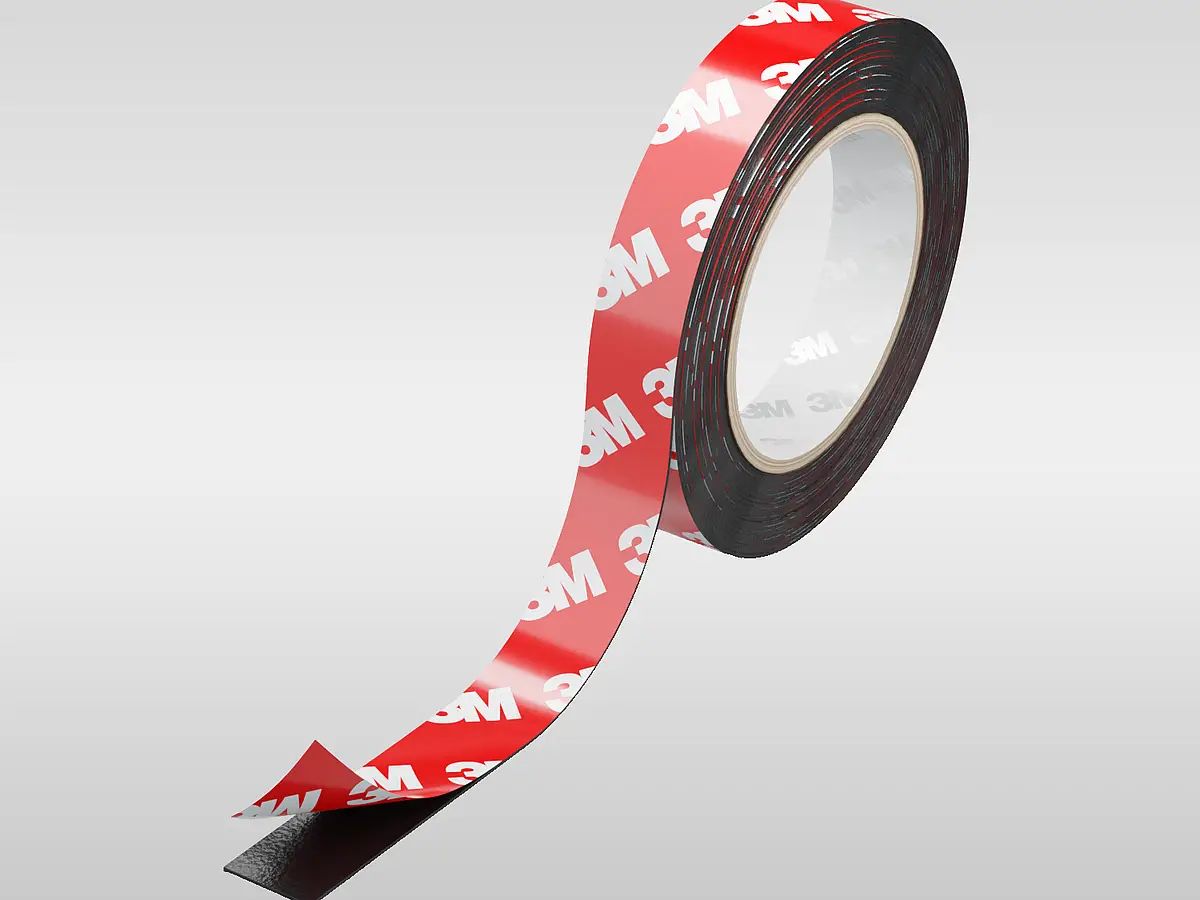
Double-sided acrylic foam tape joins components and can accommodate surface irregularities and stress between different materials. The key selection factors are the surface, tape thickness and the load on the finished bond.
01
Selection criteria
Which conditions determine the choice?
Check both bonding surfaces, the components and the thickness of the bond gap. The viscoelastic acrylic core can conform to irregular surfaces and absorb mechanical or thermal stress between components. How well it does so depends on the specific product, bond area, direction of force and service conditions.
02
ACRYLIC FOAM RANGE
Double-sided acrylic foam tapes in the range
The product listing contains tapes assigned to the acrylic foam category from 3M, tesa and Krückemeyer. Compare the data for each product's surfaces, thickness and processing requirements.


Double-sided tape
Iguna CL - Clear acrylic foam - 0.5 mm thickness - 500 mm x 33 m
Double-sided tape
Iguna CL - Clear acrylic foam - 1.0 mm thickness - 500 mm x 33 m
Double-sided tape
Iguna CL - Clear Acrylic Foam - 2.0 mm Thickness - 500 mm x 16.5 m
Double-sided tape
Iguna CL - Clear Acrylic Foam - 3.0 mm Thickness - 500 mm x 5 m

Double-sided tape
Iguna HS - High Standard Acrylic Foam - 0.4 mm Thickness - 900 mm x 33 m
Double-sided tape
Iguna HS - High Standard Acrylic Foam - 0.64 mm Thickness - 900 mm x 33 m
Double-sided tape
Iguna HS - High Standard Acrylic Foam - 0.8 mm Thick - 900 mm x 33 m
Double-sided tape
Iguna HS - High Standard Acrylic Foam - 1.2 mm Thickness - 900 mm x 33 m
Double-sided tape
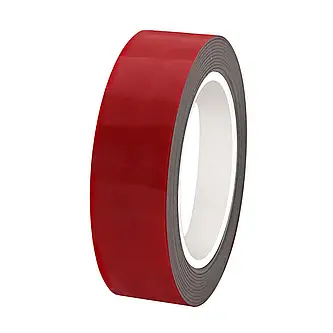
Iguna HT - High Temperature Acrylic Foam - 0.8 mm Thickness - 900 mm x 33 m
Double-sided tape
Iguna HT - High Temperature Acrylic Foam - 1.2 mm Thickness - 900 mm x 33 m
Double-sided tape
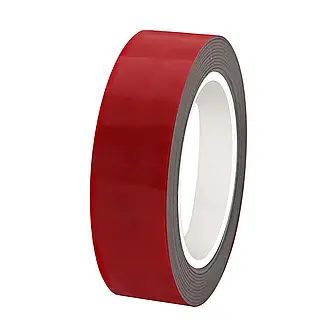
Iguna LS - Low Surface Acrylic Foam - 0.64 mm Thickness - 900 mm x 33 m
Double-sided tape
Iguna LS - Low Surface Acrylic Foam - 0.8 mm Thickness - 900 mm x 66 m
Double-sided tape
Iguna LS - Low Surface Acrylic Foam - 1.1 mm Thickness - 900 mm x 33 m

3M VHB
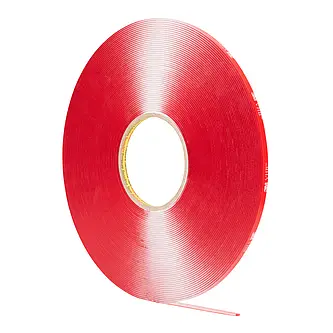
3M VHB Klebeband 4915, Transparent, 63 mm x 102 mm, 1.5 mm, Stanzteil
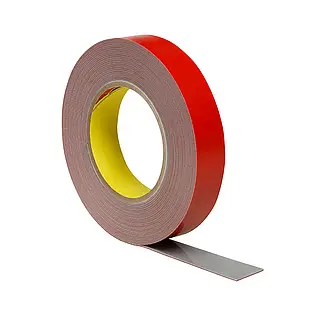
3M Double-Sided Adhesive Tape
3M Acrylic Foam doppelseitiges Klebeband GT5912TY, grau, 1.2 mm, 300 mm x 50 m
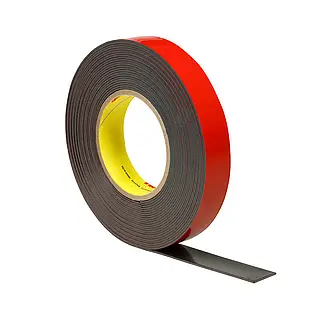
3M Double-Sided Adhesive Tape
3M Acrylic Plus doppelseitiges Klebeband EX4008, Schwarz, 0.8 mm, 600 mm x 66 m
No products match this combination.
No products match all of the selected filter criteria.
03
CONSTRUCTION AND SELECTION
Stress compensation depends on the system
Acrylic foam is more than a thick adhesive layer: its viscoelastic core combines internal strength with the ability to absorb stress. This can matter when joining different materials with different thermal expansion. Thickness helps accommodate uneven surfaces, but it does not replace checking adhesion to both components. Transparent materials, difficult-to-bond plastics and more demanding environments each require a product designed and documented for those conditions.
The acrylic adhesive tape category also covers other constructions. For specific product families and their suitability, see 3M VHB and tesa ACX Plus. Describe the surfaces, geometry, load and required supply format in the consultation form; Krückemeyer GmbH will assess the material choice and possible cut pieces or die-cut parts.
04
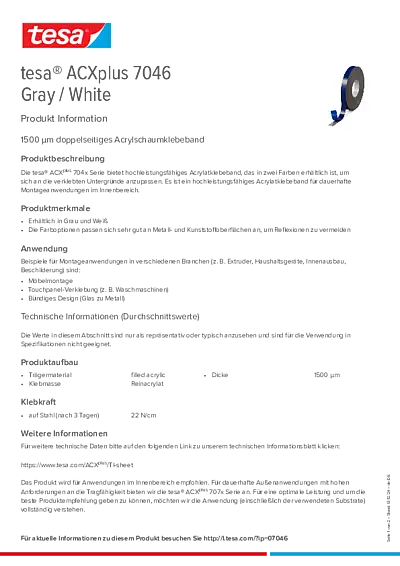
DATA SHEET FOR PRODUCT SELECTION
05
QUESTIONS ABOUT ACRYLIC FOAM
How does acrylic foam differ from a thin acrylic adhesive tape?
Here, acrylic foam describes the foamed, viscoelastic construction of the double-sided tape. Its core can bridge irregular surfaces and absorb stress between joined components. “Acrylic” on its own initially describes the adhesive chemistry; it does not specify the carrier or layer thickness. The range also contains acrylic adhesive tapes with other constructions. Base your choice on the product data sheet, both surfaces and the bond gap required, rather than the adhesive name alone.
How does acrylic foam compensate for stress between components?
The viscoelastic acrylic core can deform under load while retaining internal strength. An acrylic foam tape designed for the application can therefore distribute mechanical stress, for example when joined materials expand differently as the temperature changes. This does not mean that every material pairing is suitable. The bond area, layer thickness, direction of force, temperature and surface condition must match the specific product and be checked on the actual joint.
What thickness is suitable for an uneven surface?
The appropriate thickness depends on the actual surface texture and the bond gap between the two components. The tesa ACXplus 704x family illustrates that a single acrylic foam system comes in different thicknesses. More material can accommodate irregularities, but it does not determine bond strength or durability on its own. To choose, we need the geometry, available bond area, both surfaces and expected load. Then compare the information for the specific product and test the joint on the component.
Can acrylic foam be supplied as cut pieces or die-cut parts?
Krückemeyer GmbH can cut suitable adhesive tapes and convert them into die-cut parts for a defined component geometry. This can help with handling during application and alignment with the bonding area. Whether a particular acrylic foam tape is suitable depends on its construction, shape, liner and intended processing method. Tell us the required contour or roll width and provide details of the component, surface and process so that we can assess an appropriate supply format.
06
Request advice
Tell us about both components, their surfaces, the bond area and the load. Details of thickness, geometry and processing help us assess the appropriate acrylic foam tape and a suitable converted format.
Assess acrylic foam for your bond
For a well-founded choice, we consider the material, construction and use together. Send your application to our adhesive technology team or add specific items to your inquiry list.

ACRYLIC FOAM CONSULTATION
Thomas Klein
Contact for products
Thomas Klein will discuss the surfaces, loads and suitable supply format for your adhesive bond.